
Testing finds leakage; the process has to prevent it
Pressure tightness is not created by the final test. It comes from the casting design, gating and feeding strategy, melt and shell control, heat treatment, machining location, sealing geometry and the test condition used on the finished part.
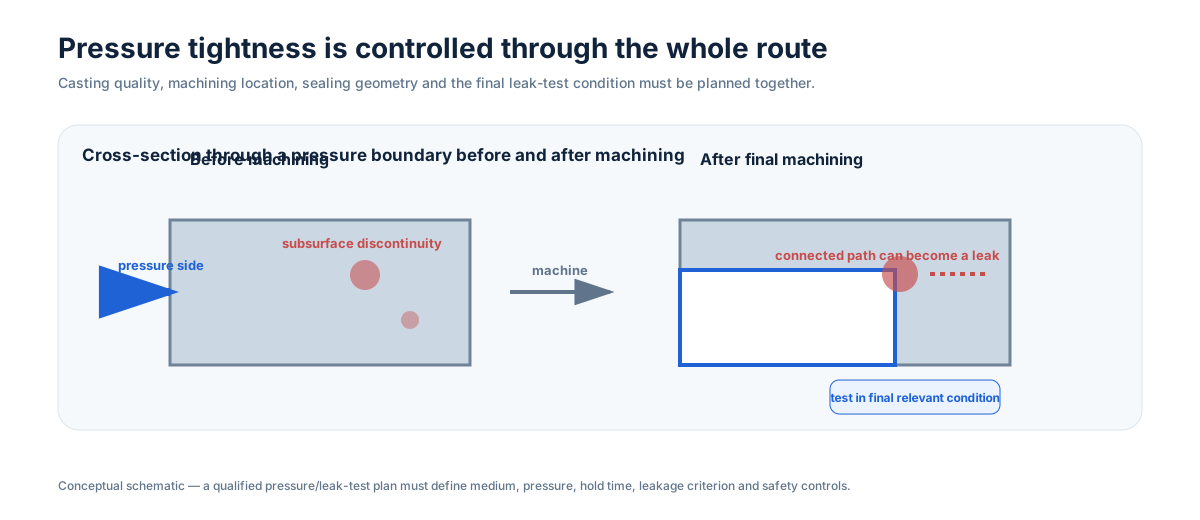
Define the pressure boundary first
The drawing should make clear which walls contain pressure, which surfaces seal, and which ports or cavities are connected during the test. Heavy junctions, isolated sections and local hot spots deserve particular process attention. If a region can be redesigned without changing function, smoother section transitions can reduce risk before any inspection is added.
Machining can change leak performance
A discontinuity that is harmless below an as-cast surface can become connected to a bore or sealing face after material is removed. For that reason, pressure-critical parts should be evaluated as a cast-and-machined system. Machining stock, bore location and seal-face cleanup need to be considered during casting DFM, not after the casting process has already been fixed.
Choose the test from the service requirement
Hydrostatic testing uses a liquid and is generally preferred when the requirement can be demonstrated safely with an incompressible medium. Pneumatic testing can be appropriate for specific leak criteria or service needs but stores much more energy, so fixtures, guarding and procedures matter. The project should define test medium, pressure, hold time, leakage criterion, temperature if relevant, and the required record.
NDT can complement pressure testing but does not replace a functional leak test when leak tightness is the actual acceptance requirement. The inspection plan should be proportional to component risk and the applicable specification.
RFQ takeaway
Provide the service fluid, design / test requirement, pressure-boundary drawing, material, critical machining and sealing surfaces, and whether impregnation or repair is permitted. That allows the casting, machining, NDT and final test route to be reviewed as one system.