
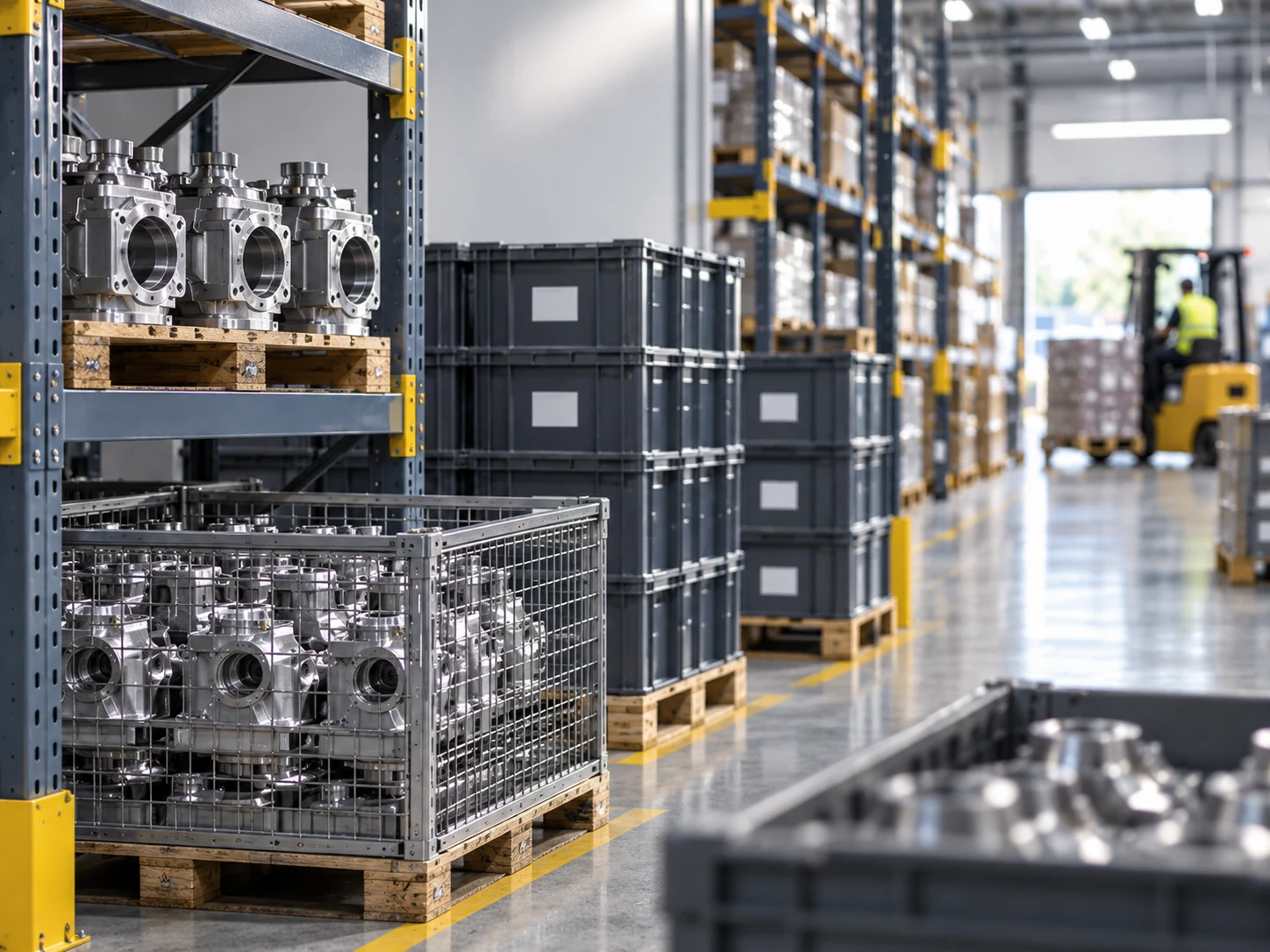
What HMLV means in an OEM sourcing program
High-mix, low-volume (HMLV) is not simply prototype work or a request for a very small MOQ. It is a repeat-production model with multiple active part numbers, smaller batch sizes, different routings, controlled revisions and recurring releases over time.
For casting and machining suppliers, the challenge is process memory: tooling, fixtures, CNC programs, inspection methods, material requirements and approved revisions must remain controlled so the next release can resume reliably.
Where HMLV fits our manufacturing route
HMLV programs can include investment castings, machined castings, CNC-machined components, polished stainless parts and selected assemblies. The route is defined per part number rather than forcing an entire family into one process.
A typical family may contain a mix of:
- investment-cast valve, pump or machinery components;
- cast + CNC parts with controlled bores, seats, threads and sealing faces;
- CNC-machined items from bar, plate, forging or other approved starting forms;
- polished, passivated or electropolished stainless components;
- parts requiring CMM, material verification, NDT or pressure-related inspection.
The operating controls that matter
Revision and configuration control
The quotation should identify the drawing revision for each part number. When engineering changes occur, tooling, CNC programs, inspection plans and work instructions must be linked to the correct revision so obsolete geometry does not re-enter production.
Fixture, program and inspection memory
A repeat lot may return after weeks or months. Reusable fixtures, setup records, tool data, inspection methods and retained first-piece knowledge reduce the risk of rebuilding the process from memory every time.
Lot planning across many part numbers
The economical production batch and the customer's immediate release quantity do not always need to be the same. Stable families can be reviewed for blanket orders, scheduled releases, Min/Max, safety stock, Kanban or VMI where demand history supports it.
Quality records by part family
Different SKUs may have different CTQs, material certificates, CMM scope, NDT requirements or pressure-test criteria. HMLV quality planning must keep those requirements separated rather than applying one generic inspection plan to every part.
HMLV versus prototype manufacturing
A prototype may be a one-time build while the design is still changing. HMLV normally assumes repeat demand and therefore requires stronger control of fixtures, programs, approved revisions, inspection records and replenishment. A low quantity alone does not make a program HMLV.
Second-source and overflow programs
Many HMLV RFQs are existing parts rather than new product launches. Buyers may need an alternate source, second source, cost benchmark or capacity-overflow supplier for a family that is already in production.
For those programs, send one representative drawing plus the part-family list, annual demand, typical release size, material, current manufacturing route and the reason for re-sourcing. We can then identify which parts fit investment casting, CNC, cast-to-machine or another route before quoting the whole family.
What to include in an HMLV RFQ
- active part numbers and current revisions;
- annual demand by part number;
- normal and peak release quantities;
- material and governing specification;
- casting / machining / finishing / assembly scope;
- critical characteristics and inspection level;
- forecast or release cadence;
- packaging and labeling requirements;
- any stocking, VMI, JIT or blanket-order expectation;
- reason for qualification: new program, second source, cost, lead time, quality or capacity.
When another supply model is better
If one part number runs at consistently high volume, a dedicated high-volume cell may be more economical than an HMLV structure. If the design is changing every build, prototype machining may be more appropriate. The correct model depends on repeatability, release pattern and process stability — not on a single quantity threshold.