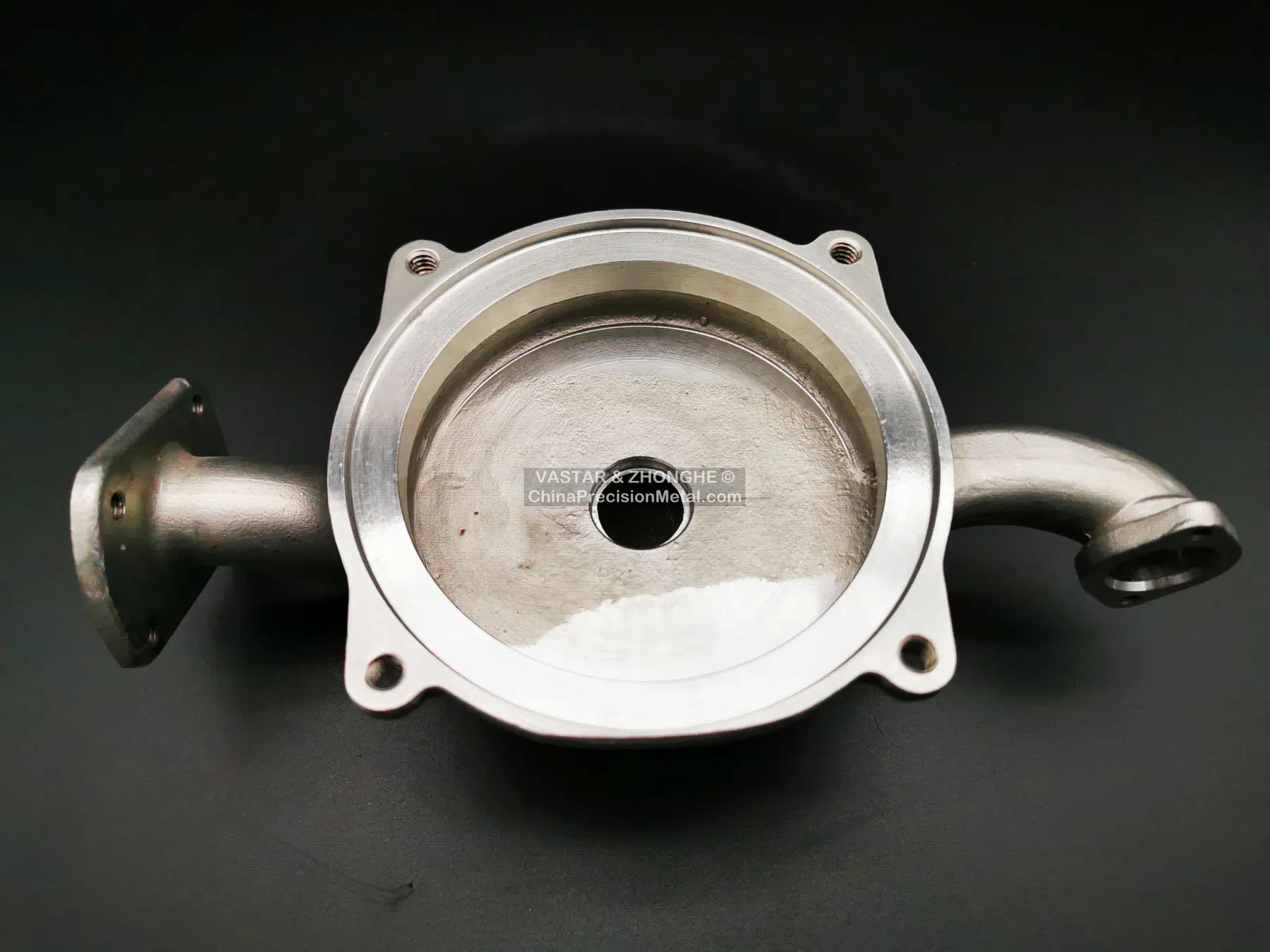
Components we manufacture
Pump and valve components often require fully machined castings, not just raw castings: valve bodies and bonnets, pump housings and casings, impellers and diffusers, Y-strainer bodies, covers and other pressure-retaining flow components.
The manufacturing route has to connect flow geometry, pressure integrity and the machined features that control assembly and leakage. That alignment matters most where machining exposes or directly defines the pressure boundary.
Typical component scope
- valve bodies / bonnets / pressure-retaining bodies
- pump housings / pump casings / covers
- impellers / diffusers / rotating flow parts
- cast + CNC / fully machined castings / finished-to-print components
- machined seats, stem bores, bearing bores, flange faces and threads
- second source / alternate source for an existing OEM drawing
Engineering priorities
- Pressure class, design / test pressure and allowable leakage
- Media, temperature, corrosion and erosion exposure
- Concentricity and datum control across seats, stems, bearings and flanges
- Material verification, NDT and traceability for pressure-retaining parts
- Machining stock around sealing faces, bores, threads and other critical interfaces
Second-source and repeat-production support
For existing production parts, we can review the controlled drawing as a second source / alternate source, including annual demand, current release size, inspection scope and the commercial reason for re-sourcing — cost, lead time, quality or capacity overflow.
For stable repeat programs, blanket orders, scheduled releases, VMI, safety stock, Kanban and JIT arrangements can be evaluated where they reduce supply risk.
RFQ inputs
Operating pressure and temperature, process media, pressure-boundary requirements, sealing interfaces, material specification, annual volume / release size, NDT class and pressure/leak-test method.
Manufacturing approach
Keeping casting, machining and pressure verification under one coordinated route reduces datum handoffs and makes it easier to trace a finished pressure-containing component back through the manufacturing process.