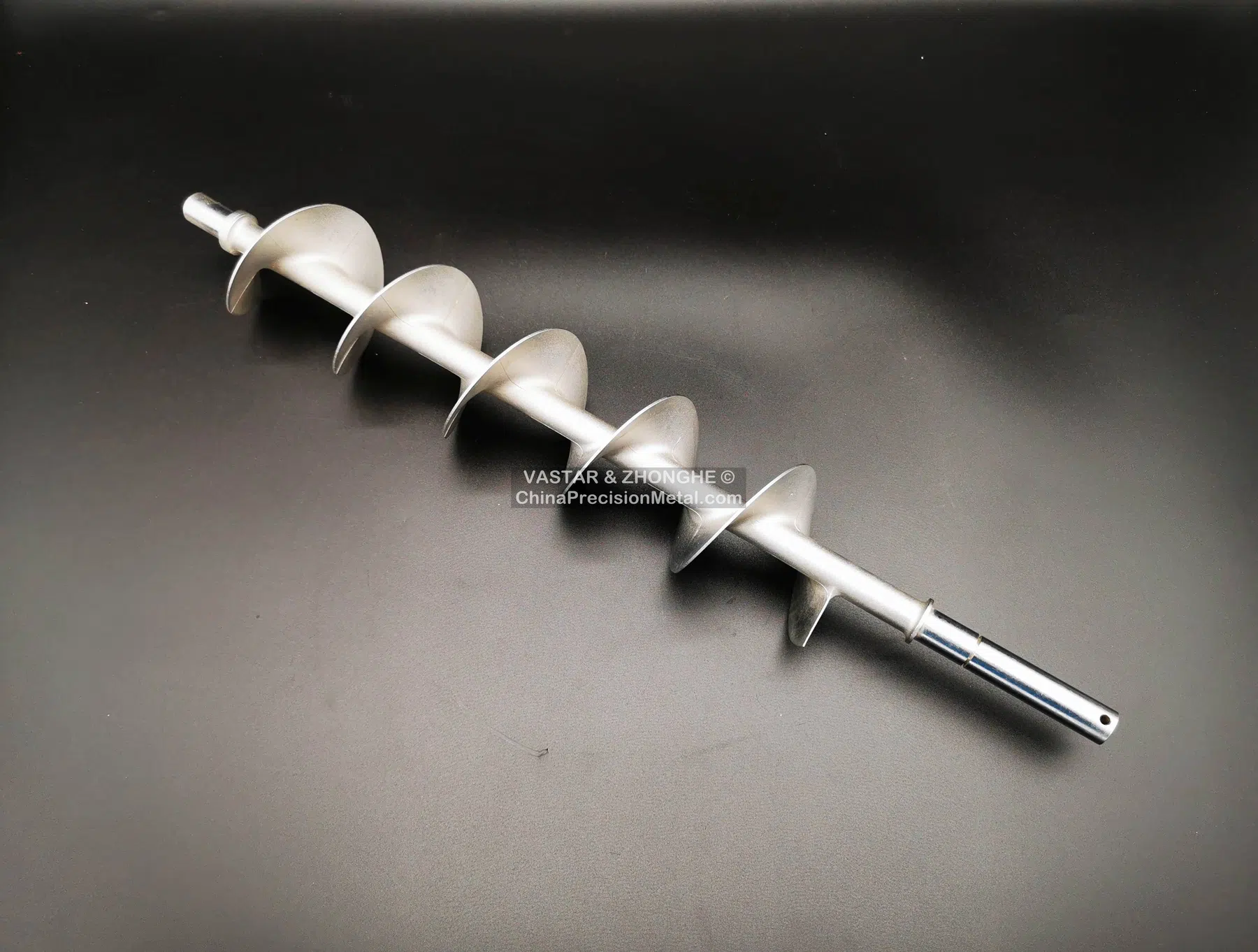
Application requirements
Industrial machinery parts are driven by function: load path, stiffness, wear, alignment, assembly time and production volume. Complex shapes can often be brought closer to net form by investment casting, while CNC machining is reserved for the interfaces and datums that determine machine accuracy and service life.
This category also covers automation and robotics, agricultural and heavy equipment, mining equipment, and textile or packaging machinery when the component requirements are similar.
Typical components
- housings, bearing carriers and covers
- brackets, arms, levers and linkage components
- machine bases, supports and mounting parts
- wear-resistant or corrosion-resistant precision components
Engineering priorities
- Load direction, stiffness and fatigue-sensitive geometry
- Datum structure, bearing/shaft fits and assembly alignment
- Material, heat treatment, hardness and wear surfaces
- Burr control, surface protection and assembly-ready delivery
RFQ inputs
Functional loads, mating parts, datum scheme, fits and tolerances, material/heat treatment, wear points, annual volume and any assembly or inspection requirements.
Manufacturing approach
The best route is not always the one with the fewest individual operations. We compare casting and machining as a complete cost-and-repeatability system, then coordinate finishing and inspection around the features that control assembly.
HMLV and second-source support
Industrial-machinery programs often include many part numbers, smaller repeat lots, engineering revisions and uneven demand. We support high-mix, low-volume (HMLV) programs and can review existing housings, brackets, adapters and machined castings as a second source or for capacity overflow when a current supplier is constrained.