
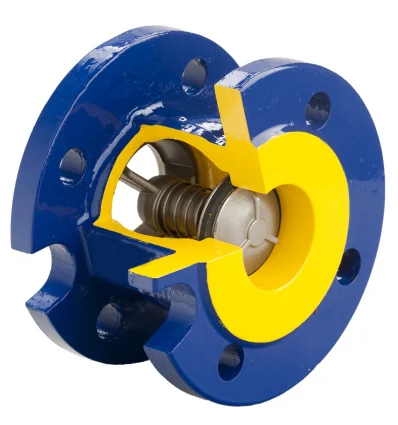
VDV check-valve program
The VDV range includes lift, swing, dual-plate and axial check-valve families. Our program sizes extend from DN15 to DN300, with PN16 configurations and a temperature range of approximately -20 to +200 °C depending on materials and sealing details. The correct design is selected from line orientation, flow rate, allowable pressure loss and closing behavior rather than size alone.
Materials and connections
Carbon steel, stainless steel and selected nickel-based alloys can be matched to corrosion and temperature requirements. Connection choices include butt-weld, clamp, flanged and threaded ends on appropriate series. Spring, disc, hinge and seat details are then reviewed for the media and expected number of cycles.
Closing dynamics matter
A check valve that closes too slowly can permit reverse velocity and increase water-hammer risk; a design with unnecessary spring force can create excessive pressure drop. Swing designs suit many general services, dual-plate designs provide a compact form, lift designs can suit controlled clean flows, and axial configurations can be considered where fast, guided closure and low transient behavior are priorities. Final selection depends on the system curve and installation arrangement.
Installation and maintenance inputs
Tell us whether the valve is installed horizontally or vertically, the normal and maximum flow, upstream disturbances, pump or compressor behavior, and available straight-run space. For dirty media, maintenance access and the possibility of seat contamination should be considered.
Quotation information
Send nominal size, pressure/temperature, media, normal and maximum flow, orientation, preferred end connection and material. If water hammer or rapid cycling is a known issue, include system information so the closing concept can be reviewed rather than simply matching the existing valve size.