
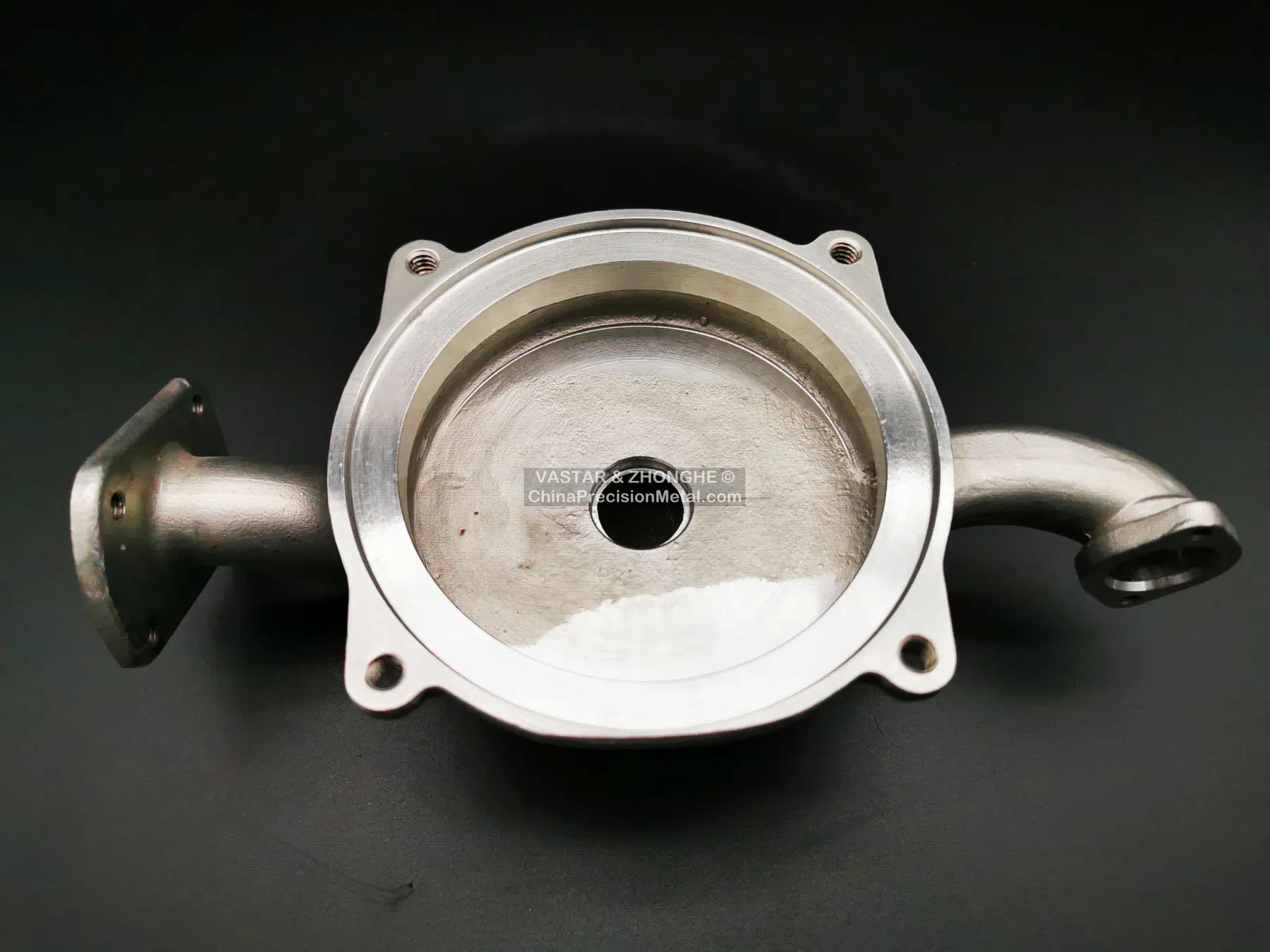
What “machined casting” means in procurement
Buyers often do not need a raw casting. They need a fully machined casting, cast + CNC component, finished-to-print casting or ready-to-assemble part with one supplier responsible for the complete route.
That route can include silica-sol investment casting, heat treatment where required, CNC turning / milling / turn-mill / HMC / VMC / multi-axis machining, surface finishing, dimensional inspection, NDT, pressure testing and agreed documentation.
Why combine casting and machining under one supplier
Datum strategy starts before tooling release
Machining stock, datum pads, clamp access, bore locations and finish surfaces can be planned while the casting is still being engineered. This reduces the risk of receiving a near-net blank that is difficult to fixture or does not leave enough stock on a critical feature.
One supplier owns tolerance stack-up
The finished drawing — not the raw casting drawing — defines success. Critical bores, seats, threads, flange faces, bearing fits and sealing surfaces are machined and verified against the same datum strategy used to plan the casting.
Casting findings feed directly into machining
Machining can expose subsurface conditions that are not visible on the as-cast surface. Keeping both operations in one route shortens the feedback loop between casting quality, stock allowance, toolpath and inspection.
Typical machined-casting programs
- valve bodies, bonnets and pressure-retaining flow-control parts
- pump housings, casings, covers, impellers and diffusers
- sanitary and hygienic stainless flow components
- complex housings, brackets, adapters and industrial machinery components
- corrosion-resistant or duplex parts with critical bores, threads and sealing faces
Second source, benchmarking and capacity overflow
A common RFQ is not a new design; it is an existing production part that needs a second source, alternate source, supplier benchmark or additional capacity. For those programs, send the controlled drawing, annual demand, current lot size, material / inspection requirements and any known supply problem such as lead time, cost, quality or capacity.
We can review the existing process as a complete delivered-part route rather than comparing casting price in isolation.
High-mix, low-volume and repeat supply
We support multiple part numbers and smaller repeat lots where tooling, fixtures, inspection plans and revision control must stay organized across a family of components. For stable repeat demand, VMI, stock-and-release, safety stock, Kanban and JIT replenishment can be evaluated separately from the economical production lot.
What to define in the RFQ
- controlled 2D drawing and 3D model
- exact cast grade / material specification and condition
- annual demand, production lot and release quantity
- critical machined features, datums and surface finish
- heat treatment and allowed / prohibited repair areas
- NDT, pressure / leak test and traceability requirements
- packaging, assembly or sub-assembly scope
- target reason for re-sourcing: cost, lead time, quality, second source or capacity overflow
Route-selection rule
Use casting for the geometry and material utilization it can create. Use CNC machining for the interfaces where fit, sealing, location or final tolerance controls function. The economic comparison should be made on the finished, inspected component — not on the raw blank alone.
See real CNC-machined parts
Browse the machining section of our real manufacturing gallery ↗