
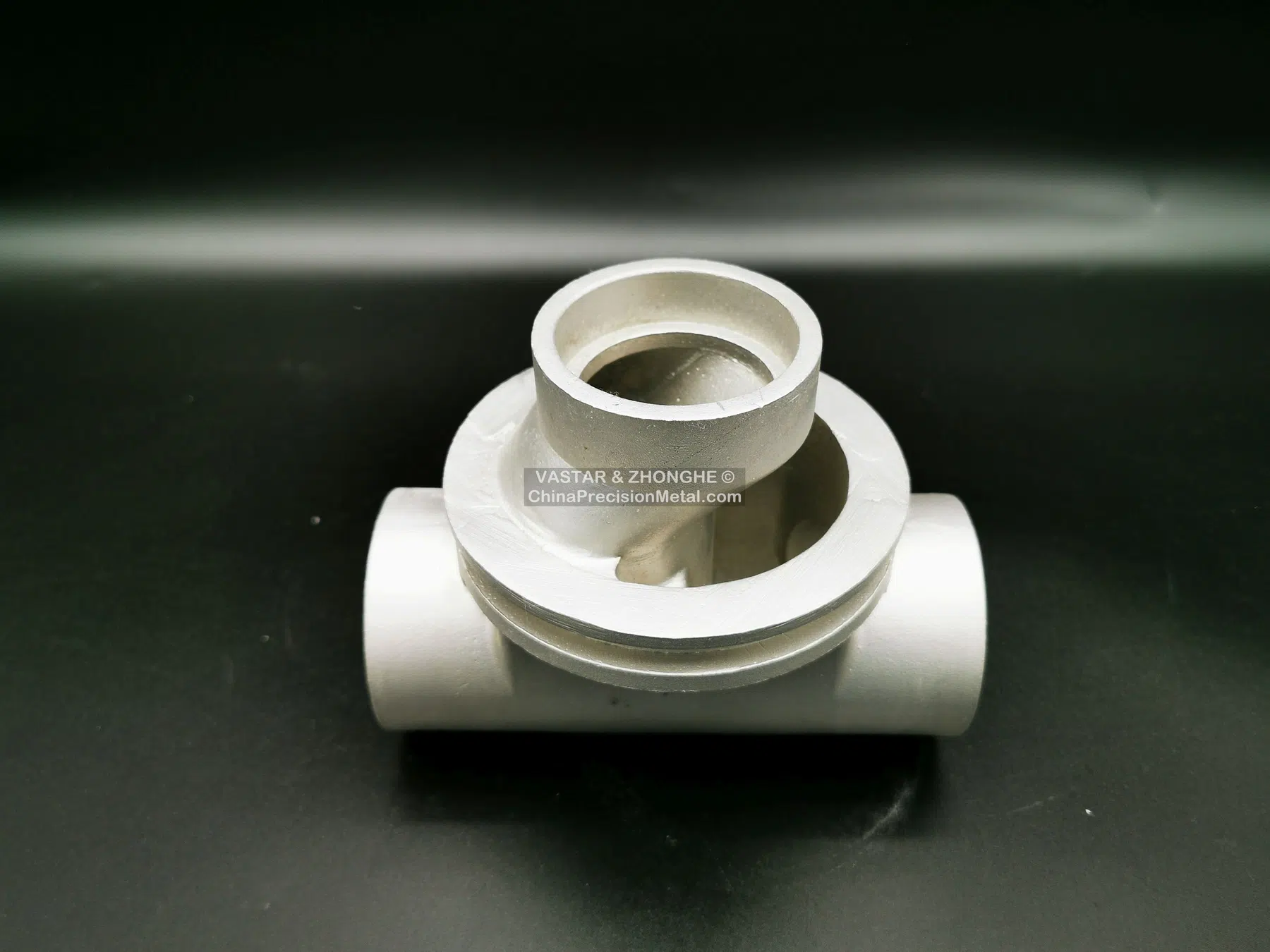
Component challenge
A pressure valve body contains a defined pressure boundary as well as machined seats, stem bores, ports, threads or flange faces. The casting must provide sound metal in the areas that remain after machining. If a tool removes significant material from a locally heavy section, subsurface discontinuities can become part of the final sealing or pressure surface.
The valve and flow-control parts in our existing portfolio demonstrate the relevant component family. Exact customer geometry, pressure and acceptance data remain project-specific.
Process planning priorities
- Mark the complete pressure boundary during DFM review.
- Avoid abrupt section changes and isolated mass around bosses and ports.
- Position gates and feeders with critical machined zones in mind.
- Define whether weld repair or impregnation is allowed.
- Sequence heat treatment, machining, cleaning, NDT and pressure testing explicitly.
Machining and test route
The first operations create stable datums for port location, sealing seats and stem alignment. Cutting conditions and clamping should minimize distortion of the pressure boundary. Dimensional inspection verifies the relationship of bores, seats and faces; penetrant, ultrasonic or other examination can be assigned according to the drawing.
Hydrostatic testing is generally preferred where the specification permits because stored energy is lower. Pneumatic testing may be selected for gas leakage sensitivity or service simulation, but it requires appropriate fixtures, guarding and procedures. The test stage should match the delivered condition, normally after final machining and cleaning.
Useful RFQ information
Provide design pressure, test pressure, test medium, hold time, leakage criterion, pressure-boundary drawing, material standard, NDT level, repair policy, critical sealing dimensions and annual quantity.
To quote this component family as a delivered part, review fully machined castings alongside the specified pressure-boundary tests and finished sealing dimensions.
For finished-part sourcing requirements, return to Valve Bodies & Flow-Control Components. Check machined seats, stem bores, pressure-boundary inspection and RFQ scope against the actual drawing. This process example does not establish a particular pressure class, verified test outcome or application qualification.
Pressure-body supplier acceptance: define the sequence
For a cast and machined valve body, acceptance has to cover the pressure boundary in its finished state. Grade name, pressure class or a generic NDT statement alone cannot confirm leakage performance.
- At casting review, identify bosses, ports, wall transitions, critical machined zones and the specified policy on weld repair or impregnation.
- At finished-part release, define seat and stem datums, NDT scope, pressure or leak test medium, pressure, hold time, allowable leakage and required reports.
Related manufacturing pages: Valve Bodies & Flow-Control Components · Pressure & Leak Testing Services · Porosity & Pressure Tightness
Related component families
Related examples describe manufacturing or sourcing decisions; they do not certify that the pictured product is the case-study part.