
The production route begins with engineering review
The process starts before wax injection. The controlled drawing, 3D model, alloy specification, critical surfaces, machining stock, inspection requirements and expected production volume are reviewed together. Tooling direction, wax shrinkage, gate location, shell access and cut-off areas are planned around the finished component.
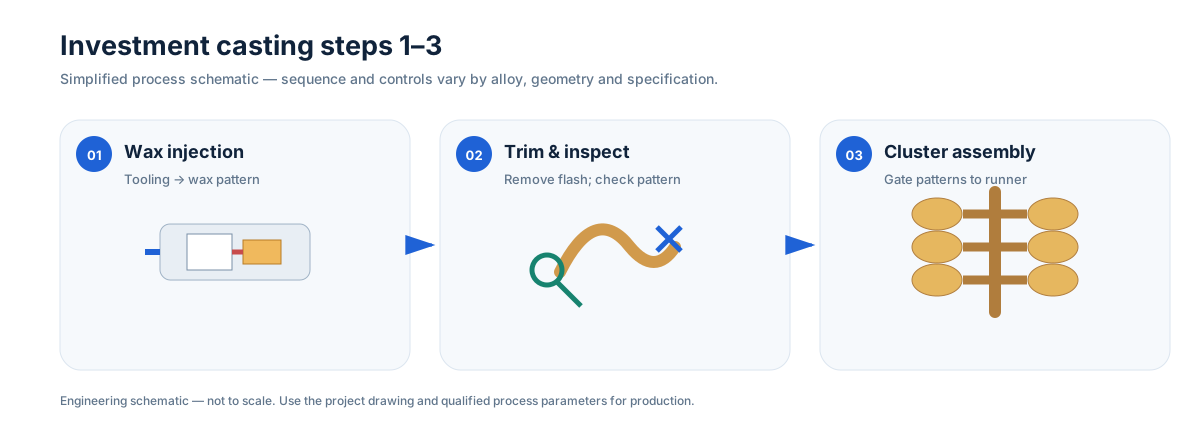
Wax patterns and cluster assembly
01 — Wax injection
Wax is injected into precision tooling to reproduce the component geometry. Temperature, injection pressure, dwell time and cooling are controlled to limit distortion and incomplete fill. Tooling and wax parameters are qualified before production release.
02 — Wax-pattern trimming and inspection
Parting-line flash, injection marks and minor surface defects are removed from the wax pattern. Patterns are visually checked and critical dimensions may be verified before assembly.
03 — Cluster assembly
Wax patterns are joined to a central runner system. Pattern spacing, orientation and gate design influence metal flow, feeding, shell strength and later cut-off access.
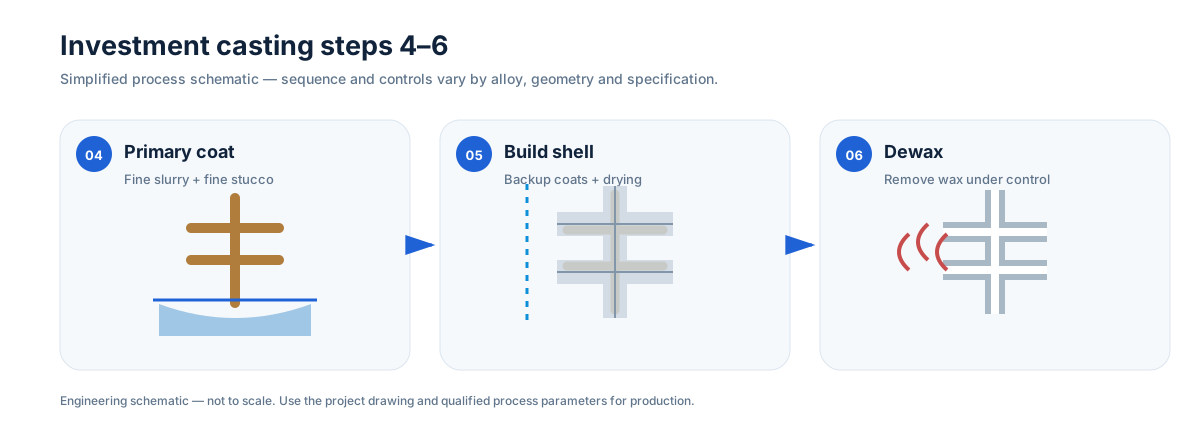
Ceramic shell and dewaxing
04 — Primary ceramic coating
The wax assembly receives a fine refractory slurry and stucco layer. The primary coat creates the casting surface, so slurry condition, viscosity, coverage and drying environment are closely controlled.
05 — Backup shell building
Additional ceramic layers build shell thickness and handling strength. Refractory size and layer sequence are selected to balance detail reproduction, permeability and resistance to cracking during dewaxing and pouring.
06 — Dewaxing
Wax is removed by the qualified dewax route. Steam autoclave and flash-fire / burnout are common methods, and some foundries combine them. The selected route must remove wax without damaging the shell; shells are then checked and fired according to the process specification.
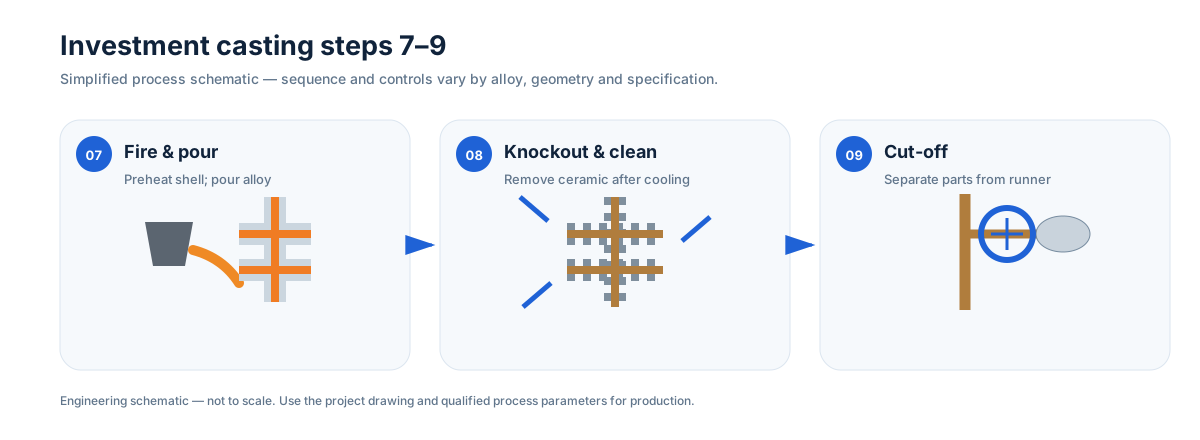
Pouring, knockout and cut-off
07 — Shell firing and pouring
Ceramic shells are fired and preheated before molten alloy is poured. Melt chemistry, temperature, shell temperature and pouring rate are controlled for the alloy and geometry.
08 — Cooling, knockout and cleaning
After solidification, the ceramic shell is removed mechanically. Internal passages and difficult cavities require a cleaning route appropriate to the geometry.
09 — Cut-off
Individual castings are separated from the runner system. Cut locations and remaining stock are planned so the operation does not damage functional surfaces.
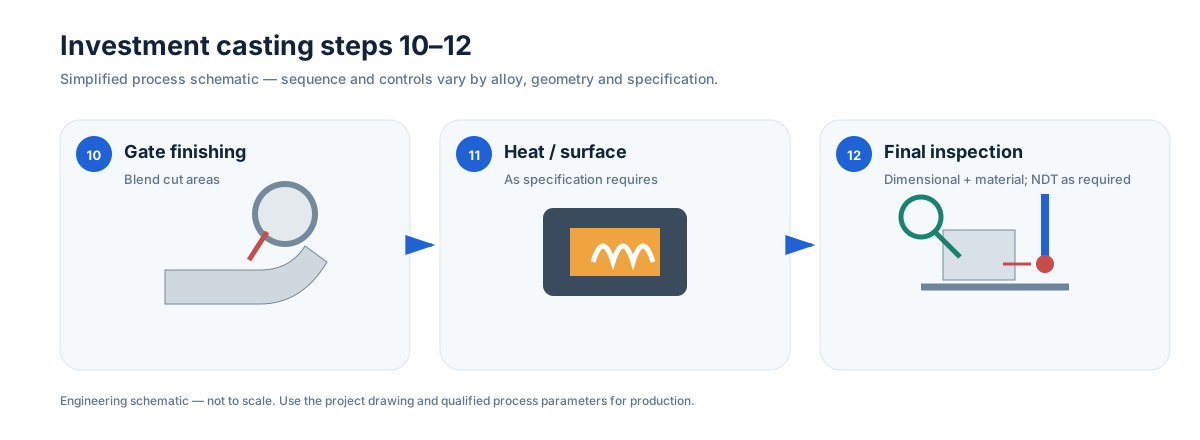
Finishing, heat treatment and final inspection
10 — Gate grinding and finishing
Residual gates and local transitions are blended. Grinding limits, surface acceptance and repair restrictions should be defined for critical components.
11 — Heat treatment, weld repair or surface treatment when specified
Heat treatment is selected from the alloy specification and required properties. Any permitted repair welding is performed under a controlled procedure and followed by the required finishing and inspection. Passivation, electropolishing, blasting or polishing may be added later in the route.
12 — Final inspection and release
Final verification may include dimensional inspection, chemistry or alloy verification from the defined heat, coupon or sample, hardness, ferrite, penetrant testing, and ultrasonic or radiographic examination where technically suitable. Mechanical testing and pressure or leak testing are added when required. The exact plan is defined by the drawing, governing standard, geometry, defect type and service risk.
Process parameters vary with alloy, component size, shell system, geometry and project specification. Values are confirmed during DFM and process qualification rather than treated as universal limits.
Downstream integration and buyer controls
Where engineering control matters most
The process is sequential, but the controls are connected. Wax variation can influence shell geometry; gating affects solidification; heat treatment can move thin or asymmetric sections; and machining can expose discontinuities that were not functionally relevant on an as-cast surface. For this reason, the manufacturing plan should be built from the finished component backward rather than treating each step as an isolated operation.
Our silica-sol route is used for stainless, duplex, carbon, alloy, heat-resistant and selected nickel-based grades. The correct shell, melt, heat-treatment and downstream inspection route depends on the alloy and part geometry. A pressure-containing valve body, a polished sanitary component and a wear-resistant machinery part can pass through the same broad process stages but require different controls and acceptance criteria.
From casting tree to finished component
After shell removal and cut-off, the component may still require gate blending, blasting, heat treatment, straightening, machining, mechanical polishing, passivation, electropolishing or other surface treatment. These downstream steps should be considered before tooling is frozen. Machining datums, polishing access and protected sealing edges can all influence the casting design.
For components with pressure or leakage requirements, testing should represent the final functional condition as closely as practical. Machining can change wall thickness or open a subsurface discontinuity, so final hydrostatic or pneumatic verification is normally planned after the relevant machining operations when that is what the drawing or validation plan requires.
What buyers should ask a casting supplier
A useful supplier discussion goes beyond “Do you make investment castings?” Ask who controls wax, shell, melting/pouring, heat treatment, machining, finishing and inspection; how material identity and lots are traced; how critical dimensions are verified; and how pressure or NDT requirements are flowed into the route. For outsourced special processes, ask how the supplier keeps traceability and acceptance records tied to the component lot.
China Precision Metal combines investment casting with 40+ CNC machines, finishing resources and dimensional/material/pressure inspection capability in the Qingdao manufacturing operation. That integration is most valuable when the drawing contains machined interfaces or controlled surface and leak requirements.
RFQ takeaway
The fastest way to get a useful manufacturing answer is to send the controlled drawing, 3D model, material specification, annual quantity and the few requirements that are truly critical to function. We will review those requirements against the combined casting, machining, finishing and inspection route.