
Machining allowance is local, not a blanket number
Stock must absorb expected casting variation, heat-treatment movement, datum setup and the cleanup needed on a functional surface. Too little can leave uncleaned areas or make the first setup unreliable. Too much increases cycle time, tool load, distortion and the chance of opening subsurface discontinuities.
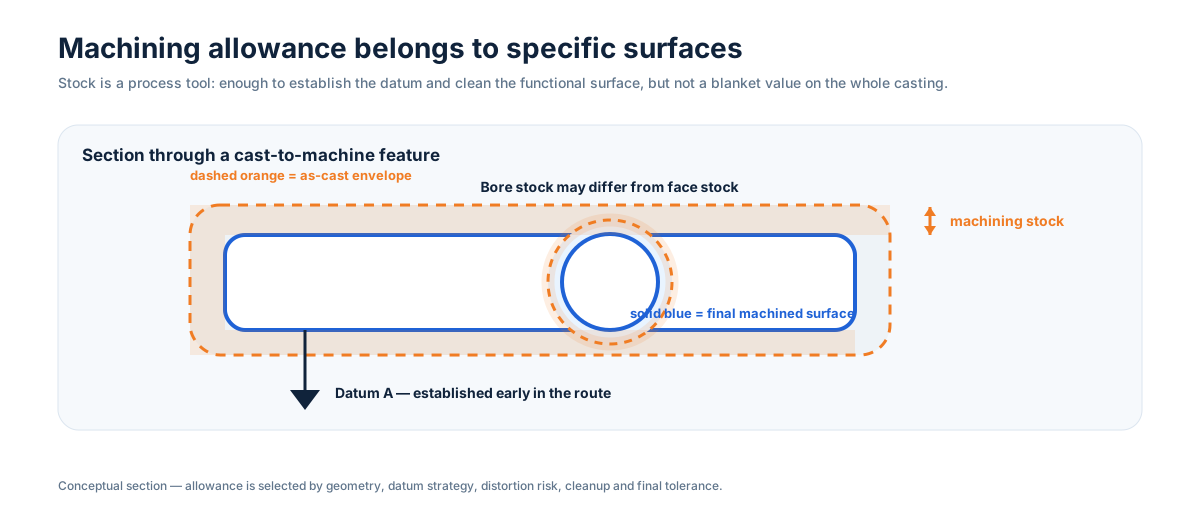
Plan stock by surface type
Sealing faces, bearing seats, bores, datum pads, threads, ports and profiled flow surfaces do not necessarily need the same allowance. Large faces and deep bores may behave differently from small local pads. The direction of draft and the way the casting will be located also affect where stock is useful.
The first setup often needs enough material to establish a dependable datum. After that datum exists, later features can be machined relative to it with less uncertainty. Purpose-designed locating pads or sacrificial bosses can therefore reduce both stock and setup time elsewhere on the part.
More stock can create new problems
Removing a thick layer in one pass can release residual stress or change stiffness, especially on open or thin-walled components. Extra stock also increases cutting time and can require larger tools or more aggressive workholding. On pressure-containing parts, deep cleanup may expose a discontinuity that was originally below the surface, which is one reason leak testing should reflect the final relevant machined condition.
Mark the surfaces that truly require cleanup
A useful drawing distinguishes “must clean completely” surfaces from noncritical cast areas. If only a seal face and two bores are functional, it is rarely economical to machine the whole envelope. The casting route and CNC route should be planned together so that stock exists where it creates control and disappears where it adds no value.
RFQ takeaway
Do not prescribe one machining allowance across the entire model unless the geometry genuinely requires it. Send the finished drawing and 3D model so stock can be assigned by datum, surface function, expected casting variation and machining sequence.