
Duplex stainless is a process specification, not only a chemistry callout
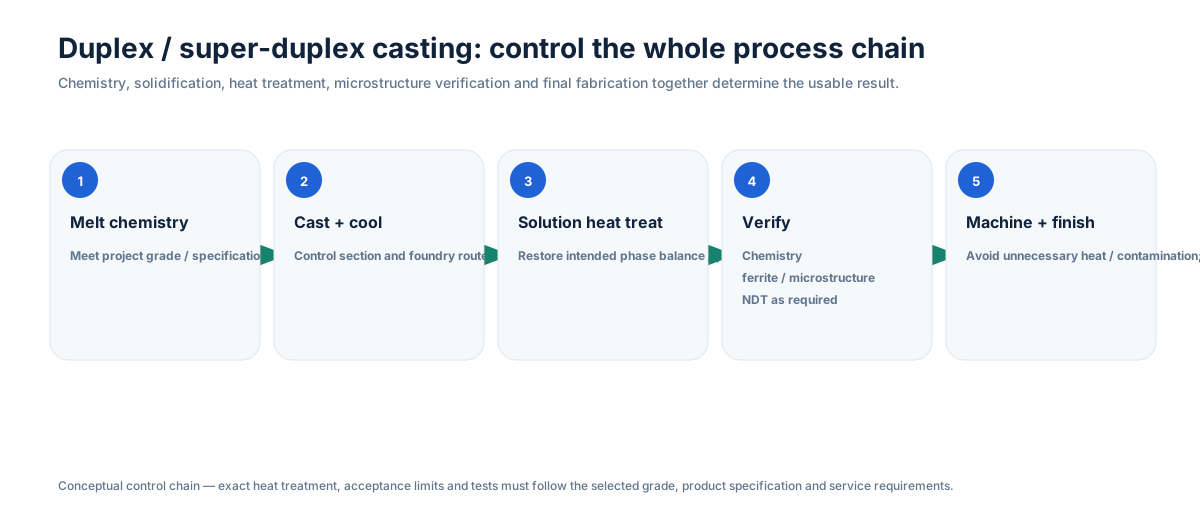
Duplex and super-duplex stainless castings depend on chemistry, solidification, solution heat treatment, phase balance and the final fabrication route. Calling out “2205” or “2507” alone is not a complete purchasing specification; the applicable material standard, service condition and acceptance requirements still need to be defined.
Chemistry control starts before pouring
Alloy composition influences corrosion resistance and phase formation. Melt practice and spectrometer verification therefore form part of the control route, but chemistry by itself does not guarantee the delivered microstructure or properties.
Heat treatment is central to the result
The casting normally requires a controlled solution-heat-treatment and cooling route appropriate to the selected grade and specification. Thick and thin sections heat and cool differently, so section geometry and furnace loading matter. Heat treatment is not a cosmetic post-process; it is part of the material result.
Geometry still matters
Duplex grades do not remove normal casting DFM constraints. Abrupt section changes, heavy junctions, inaccessible cavities and poor feeding geometry can still increase foundry risk. Higher alloy cost makes it even more important to avoid unnecessary mass and to place machining stock only where it is required.
Machining needs a deliberate strategy
The strength and work-hardening tendency of duplex stainless can increase cutting forces and tool load. Stable workholding, appropriate tooling, positive cutting conditions and a sensible operation sequence help control heat and dimensional stability. Machined seal faces, bores and threads should be tied to a clear datum strategy.
Inspection should follow service risk
A project may require chemistry confirmation, ferrite or microstructure evaluation, mechanical tests, corrosion-related testing, NDT, dimensional inspection and pressure testing depending on the product specification. The exact acceptance plan should be agreed before production rather than inferred from the alloy family name.
2205 versus 2507
Super-duplex material is not automatically the better commercial choice. If the environment does not require the additional corrosion resistance, the higher alloy content and more demanding processing can add cost without adding useful function. Material selection should follow chloride exposure, temperature, pressure, applicable standard and equipment design.
RFQ takeaway
Send the exact material designation / standard, service environment, design temperature, pressure requirement, heat-treatment and test requirements, drawing and expected annual quantity. That lets the casting, heat treatment, machining and inspection route be reviewed together.