
Wall thickness is a system decision
Investment casting can produce relatively thin and complex sections, but a single “minimum wall” number is not meaningful without the alloy, part size, flow length, local geometry and gating concept. A short thin rib near the gate is a different filling problem from a long thin wall behind several heavy sections.
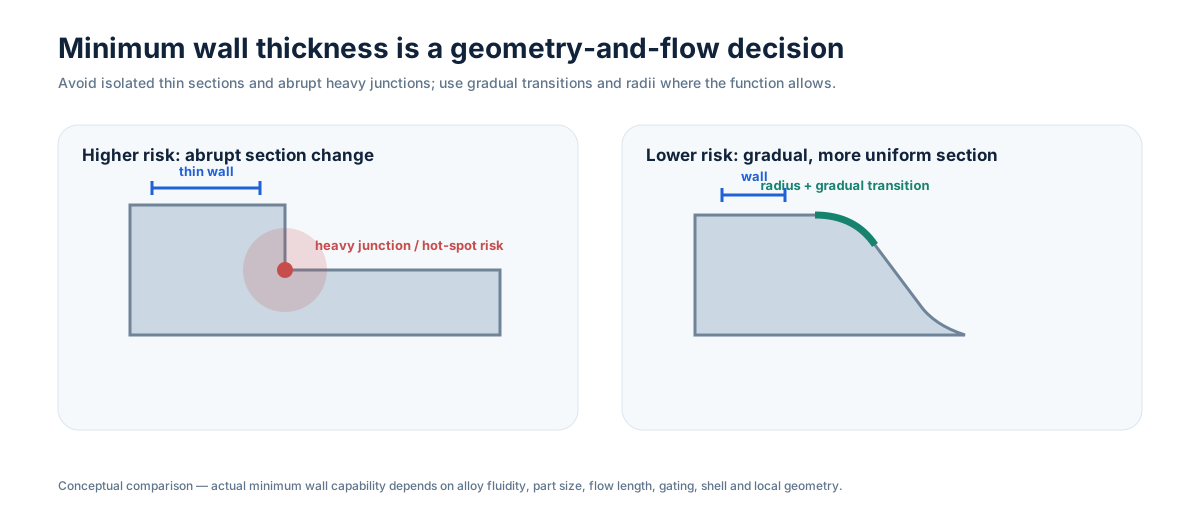
Watch transitions, not only the thinnest point
Abrupt changes from a heavy boss to a thin wall can create competing filling and solidification behavior. Where function permits, use radii and gradual transitions so metal flow and cooling are less abrupt. Isolated heavy junctions may also increase local shrinkage risk even when the neighboring wall itself is not especially thin.
Long unsupported walls can distort during wax handling, shell building, heat treatment or cut-off. Ribs, curvature or local geometry can add stiffness, but those features must still allow wax release, shell coverage and cleaning.
Review thin sections together with the alloy and route
Fluidity and pouring behavior vary by alloy. Tooling, gate location, shell preheat, pouring temperature and section connectivity all affect whether a thin feature is robust in production. That is why thin-wall claims should be confirmed on the actual geometry rather than copied from a generic table.
Machining can also change the decision. If a wall is thin only because an adjacent face will be machined heavily, the better solution may be to change the cast envelope or machining stock instead of pushing the casting process unnecessarily.
RFQ takeaway
Send the 3D model and identify the thin regions that are functionally fixed versus those that can change. We can review local flow length, section transitions, stiffness, machining stock and inspection access before the tool is released.