
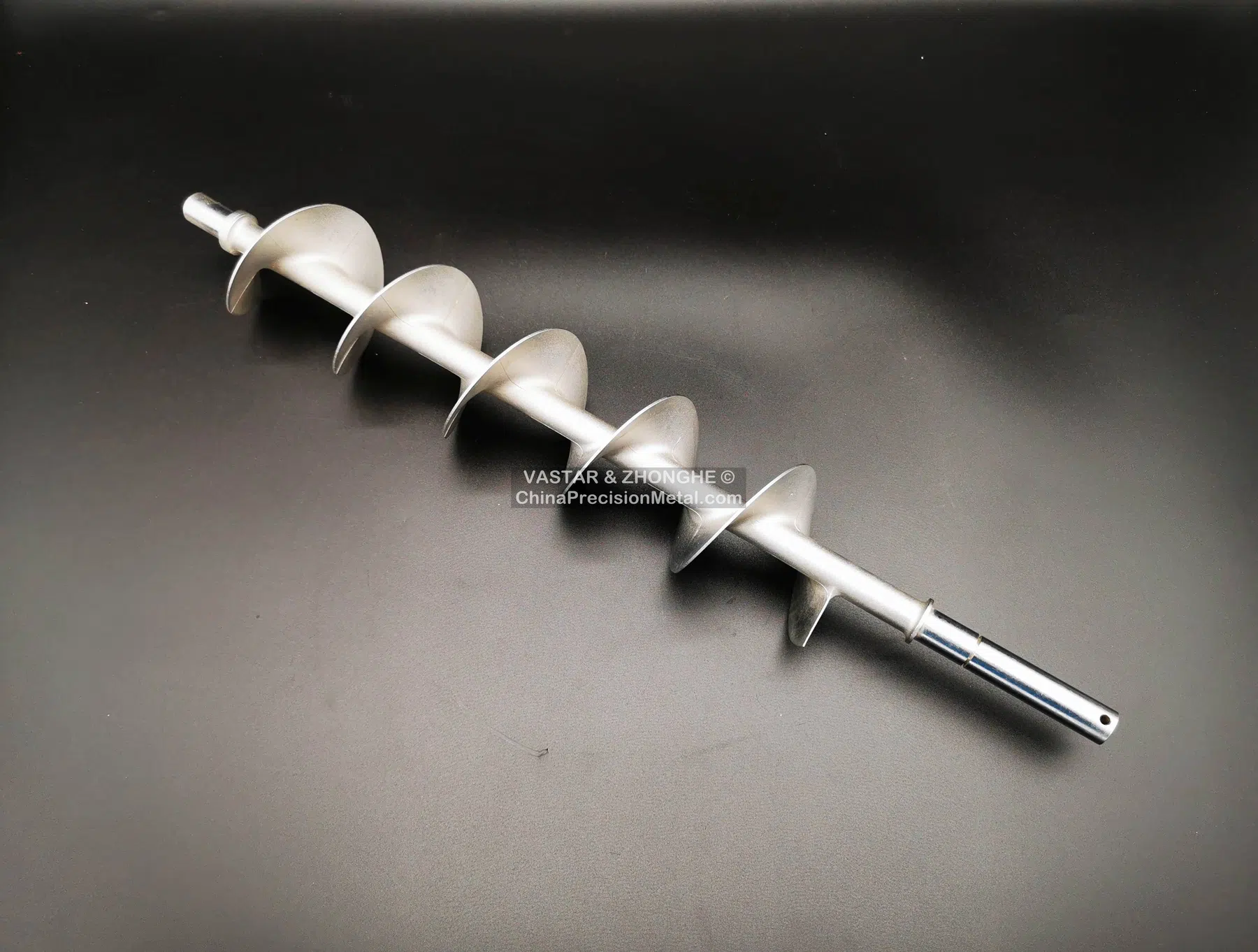
Component challenge
Long augers and shaft-like components combine an extended axis with flights, blades or other non-rotational features. They can be attractive investment-casting candidates when a machined-from-solid route would create high material waste or when fabricated flights would add welds and alignment work.
Length-to-section ratio creates a different risk profile from a compact housing. Wax handling, shell support, pouring orientation, heat treatment and cut-off can all influence straightness. The final process must also protect the relationship between the cast form and any machined journals or drive features.
Process planning priorities
- Support the wax assembly and ceramic shell to limit sag and handling distortion.
- Plan gates and cut-off locations away from functional journals where possible.
- Define allowable straightening and the stage at which straightness is checked.
- Reserve machining stock on bearing, coupling or drive features.
- Establish centers or reference features that connect the cast body to the machined axis.
Machining and verification
The machining sequence typically begins with reference surfaces or centers that establish the functional axis. Journals, shoulders, keyways or threaded ends can then be produced relative to that datum. Runout, concentricity, overall straightness and the axial position of cast features are more informative than checking isolated dimensions only.
For rotating service, balancing requirements should be stated separately from dimensional tolerances. The required inspection method depends on length, rigidity and access; CMM, dedicated fixtures, runout checks or a combination may be appropriate.
Useful RFQ information
Provide total length, straightness and runout limits, critical journal relationships, operating speed, balancing requirement, material, annual quantity and any restrictions on straightening or weld repair.